Friday, 8 April 2016

Asbury Celebrations 200

After visiting the Methodist Heritage stand at WDYTYA Live at the NEC yesterday, today we make the most of being in the "Black Country" with visits to Wednesbury, Forge Mill Farm and Queens College.Charles Wesley came to Wednesbury in 1742 and preached at Holloway Bank, making several converts who met regularly, and Charles encouraged his brother John to come and preach. John's first visit to Wednesbury took place on Friday 7th January, 1743, during the evening he gave a sermon at the Market Cross building.


John returned in May that year to find that hostility fuelled by the Parish Church vicar, Edward Egginton and the first of several riots began by mobs funded by Eggington, Methodist houses were targeted. A plea for help to the local magistrate fell on deaf ears.
Wednesbury Riots
John returned on 20th October, 1743 and preached from the now famous “horse block” at the High Bullen (in reality a flight of steps leading to the upper floor of a malt house) without incident. He stayed at Francis Ward, a local Methodist leader but while he was there the mob arrived, but soon moved on. He now felt it was time to leave, but was persuaded not to do so.
By 5 o’clock the mob returned and surrounded the cottage with cries of “Bring out the minister!” The mob’s leader entered the cottage to see Wesley and soon quietened down. Wesley then went out to talk to the crowd who asked him to go with them to see the magistrate at Bentley Hall. He consented to do so and along with some of his colleagues and the crowd of 300 or so they proceeded to see Mr. Lane at Bentley Hall. Mr. Lane told them to go home and be quiet, but this was not good enough for the crowd who then escorted Wesley to see another magistrate, Mr. Persehouse in Walsall.

Mr. Persehouse had retired for the night and so the crowd decided to go home. At this point they were attacked by a mob from Walsall, into whose hands Wesley fell. His captors were very hostile and while they were deciding what to do next, Wesley began to pray aloud. The leader of the mob was so moved by his words that he had a change of heart and they let Wesley and his friends go. That night they returned to Wednesbury after having a lucky escape!

St Barts church - Church Hill
On the morning of Monday 6th February Wesley was once again in the town accompanied  by James Jones a fellow Methodist preacher.  He found his fellow Methodists in prayer, having heard that a mob would arrive the next day from Darlaston and elsewhere to plunder the house of every Methodist in the town.At 8 o’clock the next morning Jones addressed his fellow Methodists, and as he was doing so the news came that the mob had already entered the town and had began to break into the houses. James Jones hid and left for Birmingham early the next day. The mob entered each of the leading Methodist’s houses, breaking windows and window frames, smashing everything inside and generally wrecking the place. Anything of value was taken away. No resistance was offered and most people fled.
The mob’s ring leaders threatened to sack any of their employees who did not join them in the riot and offered to cease rioting if the members of the Methodist Society would sign an undertaking to never invite or receive Methodist preachers again. They did not receive a single signature.

 Eventually things began to quiet down, and  Wesley visited and preached peacefully in the town on several later occasions. On 15th March, 1761 he preached before a crowd of between 8,000 and 10,000 people in Monway Field.

Wesley Centre
A Stone memorial and plaque now mark the spot on which John Wesley preached at High Bullen, and in "Wesley Centre which is part of Spring Head Methodist Church stands the old “horse block” from on which Wesley used to preach.

Forge Mill Farm

We journey from Wednesbury to Forge Mill Farm, set in the Sandwell valley. The farm is the site of a former Old Forge,  During the 17th century the Forge was one of several such forges along the valley. It was here that a young Francis Asbury started his apprenticeship as a nailer at the age of 13. The mill was thought to be around for centuries, quite possibly the Priory Mill  for the nearby Catholic monastery. During the time of Francis Asbury, the  Forge was one of the largest in the area and was heavily involved with the ironworking industry.
Forge Mill Farm
However it was at  the age of fifteen, Francis Asbury became involved and joined the Methodist Society. By the age of seventeen, Francis Asbury began as a local preacher at the West Bromwich Methodist Meeting house. The year following, 1763, Francis Asbury became the leader of the Society Class at West Bromwich Heath. He held this position until he was an official itinerant Methodist preacher in 1767. It was the friend of Francis Asbury, James Mayo, who started at the old Forge at the same time, who was going to be appointed to succeed the leadership of this class when Francis Asbury was admitted to the traveling circuits.

Site of the old waterwheel
A visit to Queen's College (Now Queen's Foundation), where I studied for Ministry back in the late 1980's rounded off the day. 
My Study was the far, end wall window in the furthest building (over the library) which I shared for three years with Phil Summers, of Applecart fame.

Wednesday, 6 April 2016

Asbury Celebrations 2016

Asbury 200 Celebrations

Today set off to Birmingham as part of Francis Asbury's Celebrations, marking 200 years of his death. Anne and I lived in Selly Oak for three years whilst I trained at Queens College for ministry. Two of our boys were born in Birmingham, and  whilst we worked at the Overseas Division of The Methodist Church. (Methodist Missionary Society) at Church House in London we were frequent visitors of Selly Oak federation of colleges where the Methodist Church trained Missionaries as they were called at that time for overseas service. Asbury was one of the first missionaries commissioned with Thomas Coke by John Wesley to go to America when the Bishop of London recalled most of the CE clergy during the war of independence. Asbury became the first Methodist Bishop and joint Superintendent with Coke..
Whilst the main event is on Saturday we decided to make a couple of visits to various sites around the
Oak House Museum
Black Country this afternoon. First stop was Oak house Museum, at Sandwell. A hidden gem, this Tudor house was the home to the Turton Family 400 years ago. now owed by Sandwell Council it is a hands on museum with a great children's playground. John Wesley preached twice in the courtyard which today is marked by a blue plaque.
We traveled down the road  to Wesley Memorial Church in West Bromwich to see the 'Hand and cross' sculpture by Chris Dunseath, commemorating the preaching of John Wesley. Unveiled in 1989 in Duchess Parade St but moved to the present site outside the Methodist church in 2013.


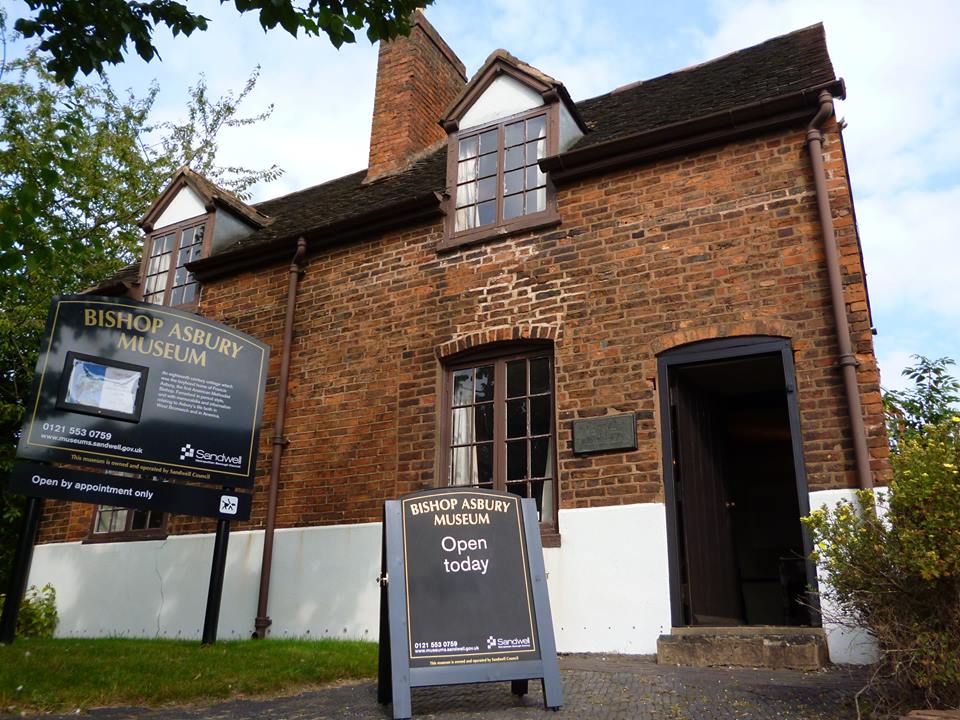
Our final visit of the afternoon was to Asbury's Cottage at Great Barr. We will revisit this on Saturday and travel by vintage bus! But as we were so close and who knows what the weather will be like on Saturday a quick photo shoot was in order. The cottage was Asbury's childhood home where he lived with his parents until he was in his mid 20's, at the age of 26 he left for America.

Tomorrow we attend the "Who do you think you are...live" at the NEC, where the Methodist has a stand, hopefully a chance to find out and discover more about Black Country Methodism.

Wednesday, 2 March 2016

John Wesley 1703 - 1791

John Wesley died 225 years ago today, on March 2, in his eighty-eighth year. As he lay dying, his friends gathered around him, Wesley grasped their hands and said repeatedly, "Farewell, farewell." At the end, summoning all his remaining strength, he cried out, "The best of all is, God is with us," lifted his arms and raised his feeble voice again, repeating the words, "The best of all is, God is with us."and passed away.
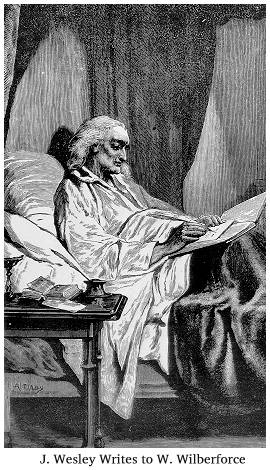
He is said to have preached 40,000 sermons and travelled 250,000 miles. Until his death in 1791 he continued to tirelessly campaign on social issues such as prison reform and universal education. His last known letter written a few days before his death to a young Member of Parliament, William Wilberforce he described black slavery as 'that execrable villainy'.

John Wesley is buried at Wesley's Chapel,  City Road, London.

In 2002, Wesley was listed at number 50 on the BBC's list of the 100 Greatest Britons.

Gary Best, Warden of the New Room, Bristol, uses Wesley’s writings and the relevant passages from his journals and letters to show that Wesley’s works are still hugely relevant for today.
Click HERE to read Gary's Blog

Tuesday, 23 February 2016

Salem Methodist Church, Watley's End, Winterbourne, (Bristol)

Last Thursday the staff of the Bristol and South Gloucestershire Methodist Circuit had a quiet day at Salem Methodist Church led by Rev Carrie Seaton. It was good to be together after the news of the death of our colleague Rev Michael Etheridge two days earlier.

Most of Winterbourne consists of post-WWII suburban development but the core settlement of Watley's End, built after 1770 on the old Common around the hatting industry, has a character which is visually distinct. Salem Chapel is one of the oldest Methodist Churches in the Bristol Methodist District. Salem was the first Wesleyan Chapel built in villages around Bristol in 1787 by hatters using local quarried pennant stone. The hatters were keen Methodists, and wherever they established a large community there was a Chapel.  John Wesley recorded in his Journal for September 17th 1787 that he preached on the foundation of a new preaching house. His entry for the day reads:

“Leaving this (Bath) Society in a better state than it has been for many years, I went to Bristol, where my brother has been for some weeks. By the way I preached at Winterbourne on the foundation of a new preaching-house. There was much rain before I began, and a violent wind all the time I was preaching; yet some of these I trust, did come to the marriage. I had now two or three days to answer my letters. Every evening our room (Bristol) was well filled with attentive hearers”


John Wesley had visited Winterbourne to preach on September 6th 1750, November 2nd 1752 and October 15th 1761 (details from his Sermon Register), so it took some years for the folk who heard Wesley preach to come to a point at which they could think of building a preaching house. The land was purchased by Robert Curtis, a hatmaker of Winterbourne, for 10 guineas, from Mr George Rolf of Thornbury. The condition of the sale was the preaching house has to be built within year, or the land reverted to its original owner.

In 1792 a further purchase of land took place. For one guinea, the land on which the present vestry, upstairs schoolroom and the area which is now the toilets, was purchased. Later that same year, Chapel House, including out-buildings, shops and small orchard was also purchased. This was transferred to a body of trustees in 1840, and later used as a ministers house, and later again by caretakers.

A certificate dated January 15th 1796 was sent to the Bishop of Gloucester stating that:
“Some of His majesty’s dissenting subjects have set apart for the service of God a room or building called the Methodists’ Chapel in the Parish of Winterbourne, which they desire may be registered in the Bishop’s Court according to an Act of Parliament of William and Mary”
(Extract from Salem Website)

The Chapel is still an important centre of religious and social life in Watley's End.

For an interesting guide around some of the Nonconformist Churches in the Bristol area click:  Here to download a map and tour guide produced by South Gloucestershire Council. 

Saturday, 13 February 2016

Samuel Wesley's 250th Birthday Celebrations in Bristol

Events happing in the New Room 

Celebrating Samuel Wesley's Birthday.

Samuel son of Charles Wesley, the family lived in their family home in Charles Street Bristol where he showed his musical talent early in life. As a boy, he was recognised as a child prodigy by the  musical establishment;
He was full eight years old when Dr [William] Boyce came to see us and accosted me with, 'Sir, I hear you have an English Mozart in your house'. I called Sam to answer for himself. He had by this time scrawled down his Oratorio of Ruth. The Doctor looked it over very carefully and seemed highly pleased with the performance. Some of his words were, 'These airs are some of the prettiest I have seen. This boy writes by nature as true a bass as I can do by rule and study'
(The Musical Wesleys. London: Herbert Jenkins)
Wesley worked as a conductor  as well as a music teacher and lecturer. He seems to have been one of the pioneers of the British organ recital. His ability on the organ was so highly regarded that he was introduced to, and played for Mendelssohn. Many of his best-known compositions were written for the church; they include the motet In exitu Israel.
Wesley was a contemporary of Mozart (1756–1791) and was called by some "the English Mozart".
In 1784, Wesley privately converted to Roman Catholicism, to the dismay of his uncle John Wesley. His hymn-writer father Charles, expressed his opinion in the following words:
While ready and resolved is he to plunge into the dark abyss
And cast his soul away
That poison of the Romish sect
O let not his soul infect
 Samuel died in 1837 and was buried in St Marylebone Parish Church London.


CLICK HERE 
to listen to Samuel Wesley'sSymphony in E flat Major Allegro

New Room Development Project

Sunday, 7 February 2016

Asbury Celebrations Birmingham 9th April2016

2016 marks the 200th anniversary of the death of Bishop Francis Asbury, who sailed from the port of Pill, Bristol in 1771 after being ordained by John Wesley. Asbury became the first Joint Superintendent Methodist minister in America.
Asbury became a local lay preacher for Methodist meetings at age 18. At age 22, John Wesley appointed him as a travelling preacher. His home still stands and is open as a museum in West Bromwich, England. 
In 1771 he volunteered to travel to America. Within the first 17 days of being in the colonies, Asbury had preached in Philadelphia and New York. During the first year he was Wesley’s assistant and preached in 25 different settlements. When the American War of Independence broke out in 1776, he and James Dempster were the only Methodist ministers to remain in America.
In 1813, Asbury wrote his will. This was a time when “the greatest membership gain in the history of the church” was achieved. In 1814 his health started to fail and he became ill. In 1816 he started to regain strength and continued his preaching journey. He “preached his last Sermon in Richmond, Virginia” on March 24, “and dies at the home of George Arnold near Fredericksburg” on March 31

In partnership with the Black Country Living Museum, The Methodist Church are celebrating Asbury’s early years as a local apprentice metal worker, and the impact of Methodism on the industrialised Midlands of the nineteenth century.
There will be an opportunity to visit his childhood home in a vintage bus, experience a Victorian Sunday School and other activities, including a special visit of Burslem's Gospel Car.

Gospel Car 'No 11 Ebenezer' at Swan Bank Methodist Mission

The Wesleyan and Primitive Methodists and Church Army all used 'Gospel cars' in the nineteenth and early twentieth century. They toured Markets, Fairs,and rural locations. Within Methodism, horsedrawn wagons were partly replaced by hand-pushed 'trek carts' in the inter-war years, and finally by deaconess' caravans in the 1950s.

Burslem is in the heart of the Potteries. John Wesley visited many times and it was the birthplace and early home of Primitive Methodist leader,William Clowes.
This faithful reproduction of Car No 11 was built in 2011, and is normally housed at Burslem's Swan Bank Mission between visits to schools and churches, when visitors can listen to '78s' on the gramophone, try the loud hailer, beds and harmonium, and watch a magic lantern slide show.

The Bristol & South Gloucestershire Circuit have a 21st century version - our VW converted Camper Vans known as Vincent & Wilfred!

Our Van also comes with built in projection - Flat screen TV, kitchen, tables and sofa's,


and will touring around the County Shows, and various other venues throughout 2016.

Anne and I have booked for the event at the Black Country Museum on Saturday 9th April at an early bird price of £9 per person. We will be staying overnight at the Premier Inn at Longbridge (£35). If you want to join us.

Click HERE for more information and tickets


Click  HERE to take the Asbury Quiz

Asbury’s boyhood home and now a small museum – is being opened between 11am and 4pm on Thursday 31 March, the actual anniversary of his death.


Thursday, 28 January 2016

Exeter

Today I found myself on a trip to meet colleagues in Exeter, Devon. I received first class hospitality from the Chair of the Plymouth and Exeter District, Graham Thompson who provided lunch as we discussed the nature of Probation and pre ordination training.
Arriving early I took the opportunity to visit Exeter Cathedral and walk around the city.

Exeter Cathedral

John and Charles Wesley first came to Exeter in September 1739 when John preached at the morning service in St. Mary Major Church (rebuilt in 1800's). He was not allowed to preach again in the afternoon.  In the foyer of “The Mint” Church Exeter there is a portrait of John Wesley and an oak drop leaf table on which he stood, while preaching in Southernhay.

 In 1749 Bishop Lavington of Exeter, compared Methodists to Papists, Wesley described his task to refute this with a sigh. “Heavy work, such as I should never choose; but sometimes it must be done.” and as was his custom sent a private letter to the writer, pointing out the error of his ways. The controversy with Dr. Lavington, Bishop of Exeter, was one of the most painful Wesley ever had and lasted until 175.
The historian Veronica Wedgwood said of Lavington: that he “deserves to be coupled with the men who flung dead cats and rotten eggs at the Methodists, not with those who assailed their tenets with arguments, or even serious rebuke.” Wesley clearly pointed this out to Lavington: “Any scribbler with a middling share of low wit, not encumbered with good-nature or modesty, may raise a laugh on those whom he cannot confute, and run them down whom he dares not look in the face. By this means, even a comparer of Methodists and Papists may blaspheme the great work of God, not only without blame, but with applause, at least from readers of his own stamp. But it is high time, sir, you should leave your skulking place. Come out, and let us look each other in the face.”

Complicating matter further, Wesley declines a discussion of the whole matter of Christian perfection with the Bishop, “till you have learned a little heaven honesty”
To be fair to Bishop Lavington’s concern over the “Enthusiasm” that Wesley and the early Methodist had was the memory that in Europe such “Enthusiasm” had led to civil war and regicide.
Although the controversy continued for two years, in August, 1762, a fortnight before the Bishop’s death, Wesley was at Exeter Cathedral. “I was well pleased,” he wrote in his journal, “to partake of the Lord’s Supper with my old opponent, Bishop Lavington. Oh, may we sit down together in the kingdom of our Father!”

His journal also records, “At the cathedral we had a useful sermon, and the whole service was performed with great seriousness and decency. Such an organ I never saw or heard before, so large, beautiful, and so finely toned; and the music of “Glory be to God iin the highest,” I think exceeded the Messiah itself”. – In fact there are only three places recorded in his journal in which he expresses appreciation for the organ in worship, albeit grudgingly!

Again on 18th August 1782, Wesley attended worship at the cathedral, and was invited afterwards by the Bishop to have dinner at the Bishops palace – He describes the meal as ‘sufficent but not redundant; plain and good, but not delicate’.